
412-428-0008
Schedule a Consult
Now Accepting New Patients
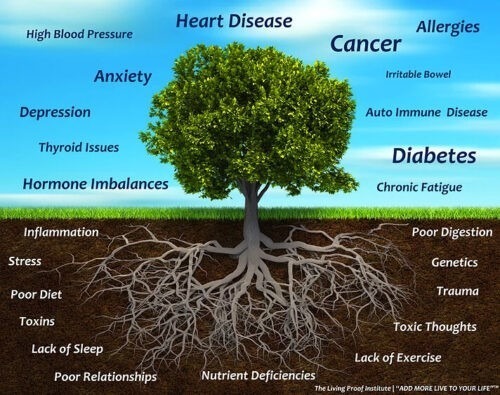
Imagine your body is a house. Traditional medicine often patches the roof when it leaks. Functional medicine asks: why does the roof keep leaking? What is going on with the foundation?
Functional medicine is a way of caring for people that looks at the whole picture. It does not just treat symptoms. It digs deep to find the root cause of why you feel the way you do. It asks questions like: What are you eating? How are you sleeping? What stress are you carrying? What happened to your body over the years that brought you here today?
Functional medicine doctors see you as a unique person, not just a diagnosis on a chart. They spend real time with you. They listen. They connect the dots between your gut, your hormones, your brain, your immune system, and your emotions. Everything is connected, and that is exactly how they treat you.
This type of medicine has been growing quickly because so many people feel stuck. They have been told their labs look “normal,” but they feel anything but. They are tired, foggy, inflamed, and frustrated. Functional medicine finally gives those people a real answer.
If you have been living with a problem that no one seems to be able to fix, functional medicine might be your answer. It works especially well for people dealing with chronic, long-term health struggles.
Think about the person who has been exhausted for years. Or the one who bloats every time they eat and can’t figure out why. Or the woman who has been told her thyroid is “fine” but still gains weight, loses hair, and feels frozen inside. These are the people functional medicine is built for.
Some of the most common problems functional medicine addresses include: chronic fatigue, brain fog, autoimmune diseases like Hashimoto’s or lupus, digestive issues like IBS or leaky gut, hormonal imbalances, mood disorders like anxiety and depression, type 2 diabetes, metabolic syndrome, chronic pain, and skin conditions like eczema or psoriasis.
What makes this powerful is that the same root cause can show up in many different ways in different people. Inflammation, for example, can look like joint pain in one person and depression in another. Functional medicine finds the fire, not just the smoke.
Traditional medicine, also called allopathic medicine, is incredible in a crisis. If you break your arm, have a heart attack, or need surgery, that is exactly where you want to be. It is built for emergencies and acute care, and it saves lives every single day.
But here is the truth. Traditional medicine was not really designed for the slow, creeping kind of suffering. It was not built for the person who feels half-alive but has “normal” test results. It was not designed to ask why your immune system turned against you, or how your childhood trauma might be living in your body as chronic pain today.
In a typical doctor’s visit, you get maybe 7 to 10 minutes. You describe your symptoms. You leave with a prescription. That prescription may quiet the symptom, but the root cause is still there, still growing.
Functional medicine flips that model. Your first visit might last an hour or more. You talk about your full health history, your diet, your stress, your sleep, your relationships, your environment. You are treated like a whole human being, because that is exactly what you are.
The other big difference is the goal. Traditional medicine often manages disease. Functional medicine aims to reverse it, or prevent it from ever happening in the first place.
Have you ever sat in a doctor’s office, poured your heart out about how awful you feel, and then been handed a pamphlet and sent home? Have you ever been told, “Your labs look fine. Maybe try reducing stress,” when you know deep down something is really wrong?
If that hits home, you might be a perfect candidate for functional medicine.
You are likely a candidate if you have one or more chronic health issues that have not fully responded to standard treatment. You are a candidate if you are on multiple medications and still not feeling well. You are a candidate if you have been diagnosed with an autoimmune condition, a hormonal disorder, a gut problem, or a mood disorder and you want answers, not just management.
You are also a candidate if you are just tired of feeling tired. If you wake up exhausted. If your brain feels slow. If your body feels like it is working against you. You do not have to wait until things get worse to seek a better way.
Functional medicine works for people of all ages. It works for kids with focus issues or recurring infections. It works for adults battling weight gain or anxiety. It works for older patients trying to protect their memory and mobility. If you are alive and struggling, you are a candidate.
This is where things get really eye-opening. You have probably had blood work done before. Your doctor checks a basic panel, looks at it, says everything is normal, and moves on. But normal and optimal are two very different things.
Standard lab tests are built to catch serious disease. They are looking for the extremes. But what about the middle ground? What about when your body is struggling but not yet in full breakdown? That is the grey zone where most people are suffering, and standard labs often miss it completely.
Functional medicine uses a much wider lens. Tests may look at detailed thyroid panels that go far beyond just TSH. They examine gut health through stool analysis, checking for harmful bacteria, parasites, inflammation, and how well you are absorbing nutrients. They test for nutrient deficiencies like vitamin D, B12, magnesium, and zinc, which can have a massive impact on how you feel.
Hormone testing in functional medicine is also far more detailed. Rather than just checking if a hormone is present, it looks at how your body is actually using and breaking down those hormones. Sex hormones, adrenal hormones, and insulin response are all examined together, because they work together.
Some functional medicine practitioners also use genetic testing to understand how your DNA affects the way you process food, detox your body, and respond to stress. Others use advanced inflammatory markers that go far beyond a standard CRP test.
The difference is this: standard labs tell you whether you are sick. Functional medicine labs tell you how to get well. That is a shift that can change everything.
You deserve more than a 10-minute appointment and a prescription that masks the problem. You deserve someone who listens, who digs deep, and who treats you like the complex, incredible human being you are. That is what functional medicine is about. And it might just be the thing you have been looking for all along.
Many people turn to us when traditional treatments fail. This approach gives them hope and better health. They often find relief from: